


-
 Written By:
Alex Herrera
Written By:
Alex Herrera
-
 Edited By:
Phyllis Rodriguez, PMHNP-BC
Edited By:
Phyllis Rodriguez, PMHNP-BC
-
 Clinically Reviewed By:
Dr. Ash Bhatt, MD, MRO
Clinically Reviewed By:
Dr. Ash Bhatt, MD, MRO
For many people, addiction is closely connected to past emotional pain or unresolved trauma. If you’ve ever felt emotionally unstable, unsafe, or overwhelmed during recovery, you are not alone. These reactions often occur because trauma changes how the nervous system responds to stress.
According to the National Institute on Drug Abuse, individuals with substance use disorders are significantly more likely to have experienced trauma, including childhood abuse, neglect, violence, or loss.
Trauma-informed therapy changes this experience. Instead of pushing the nervous system through distress, this approach focuses on helping your mind and body feel safe and stable first.
At Legacy Healing Center Los Angeles, trauma-informed care is a foundational part of our approach to recovery to help patients feel supported, emotionally safe, and capable of building lasting stability.
Key Takeaways
- Trauma-informed therapy makes withdrawal safer and more emotionally stable.
If you have experienced trauma, your nervous system may be more sensitive to stress. During detox, this can lead to anxiety, panic, sleep disruption, or emotional instability. Trauma-informed care focuses on stabilizing these responses first, helping you feel calmer, safer, and more in control during recovery. - Personalized sequencing prevents emotional overwhelm.
Everyone’s experiences and emotional capacity are different. Trauma-informed programs carefully sequence therapy so stabilization happens before trauma processing, allowing recovery to progress at a safe and sustainable pace. - Long-term emotional stability is built through continued support and measurable progress.
Recovery does not end after detox. Ongoing therapy, emotional regulation skills, and structured aftercare help strengthen stability, reduce relapse risk, and support long-term healing.
Why Should Experienced Patients Choose Trauma-Informed Therapy?
If you’ve previously attempted detox or treatment and found it emotionally overwhelming, trauma may have played a role. Trauma can leave the nervous system in a heightened state of alert, making stress responses more intense during withdrawal. This can show up as:
- Hyperarousal responses – including panic, irritability, insomnia, and exaggerated startle reflex. These symptoms often mirror past traumatic states and can feel psychologically unsafe.
- Emotional shutdown or dissociation – patients may appear calm but internally feel disconnected, numb, or overwhelmed, increasing relapse vulnerability.
- Mood instability spikes – trauma history often intensifies depressive crashes during stimulant or alcohol withdrawal.
| “When trauma isn’t addressed, detox can feel like reliving chaos. Stabilization must come first,” – Dr. Ash Bhatt. |
How Trauma Type Influences Therapy Selection
Trauma is not the same for everyone. Your experiences, when they happened, and how long they lasted can all influence how your nervous system responds during recovery. Understanding the type of trauma you’ve experienced allows clinicians to create a recovery plan that protects your emotional stability while strengthening your ability to heal.
- Childhood trauma often results in attachment instability, chronic shame patterns, and persistent hypervigilance. These patients may struggle with trust and emotional regulation. Early treatment focuses on distress tolerance, grounding skills, and nervous system stabilization before introducing trauma processing modalities.
- Recent trauma may present with acute stress responses, intrusive memories, or sleep disruption. Because the trauma is less developmentally embedded, structured stabilization may be shorter in duration, but must be carefully timed to prevent reactivation during detox.
- Complex trauma (repeated or prolonged exposure) requires phased treatment models. This approach involves gradual desensitization, emotional regulation strengthening, and consistent monitoring before deeper trauma work begins.
Advanced Assessment for Personalized Treatment
Personalized recovery begins with assessment where programs aligned with high-acuity, trauma-informed standards use structured pre-treatment evaluation to prevent destabilization.
At Legacy Healing LA, this process mirrors a 360-degree clinical assessment, designed to understand the full emotional, physiological, and behavioral picture before treatment begins. Our evidence-based programs incorporate:
- Understanding your stress and emotional patterns to identify baseline anxiety levels, and how your nervous system responds to pressure.
- Identifying emotional triggers to determine specific interpersonal, environmental, or internal cues that escalate distress or relapse vulnerability.
- Monitoring physical and nervous system responses to evaluate sleep disruption, tremor severity, cardiovascular reactivity, and other withdrawal-linked markers that may overlap with trauma responses.
How Can Pre-Treatment Planning Improve Emotional and Physical Safety?
Pre-treatment planning significantly reduces medical and psychological complications during withdrawal. Additionally, alcohol withdrawal can range from mild anxiety to life-threatening complications such as seizures or delirium tremens. Similarly, opioid withdrawal, while rarely fatal, is intensely distressing and strongly associated with relapse risk. Personalized stabilization planning reduces these risks.
Addiction-Specific Planning for Different Substances
Because each substance affects the brain and stress response differently, safety planning must be substance-specific to prevent avoidable complications.
- Alcohol withdrawal plan -Personalized alcohol recovery planning focuses on monitoring for safety and medical stability, reducing anxiety, and supporting healthy sleep patterns, helping you feel safer and more emotionally secure during detox.
- Opioid stabilization strategy – A trauma-informed opioid recovery plan focuses on gradual stabilization to reduce shock to the nervous system, medication support, and emotional support to reduce distress and anxiety.
- Stimulant (cocaine or methamphetamine) recovery strategy – Personalized planning focuses on monitoring mood and emotional stability, supporting nervous system recovery, and providing therapeutic support to reduce emotional crashes.
Step-by-Step Pre-Program Strategy
A structured pre-program strategy provides patients with a defined clinical pathway, reducing uncertainty, which research consistently links to heightened stress reactivity. In trauma-informed settings, pre-treatment planning generally includes:
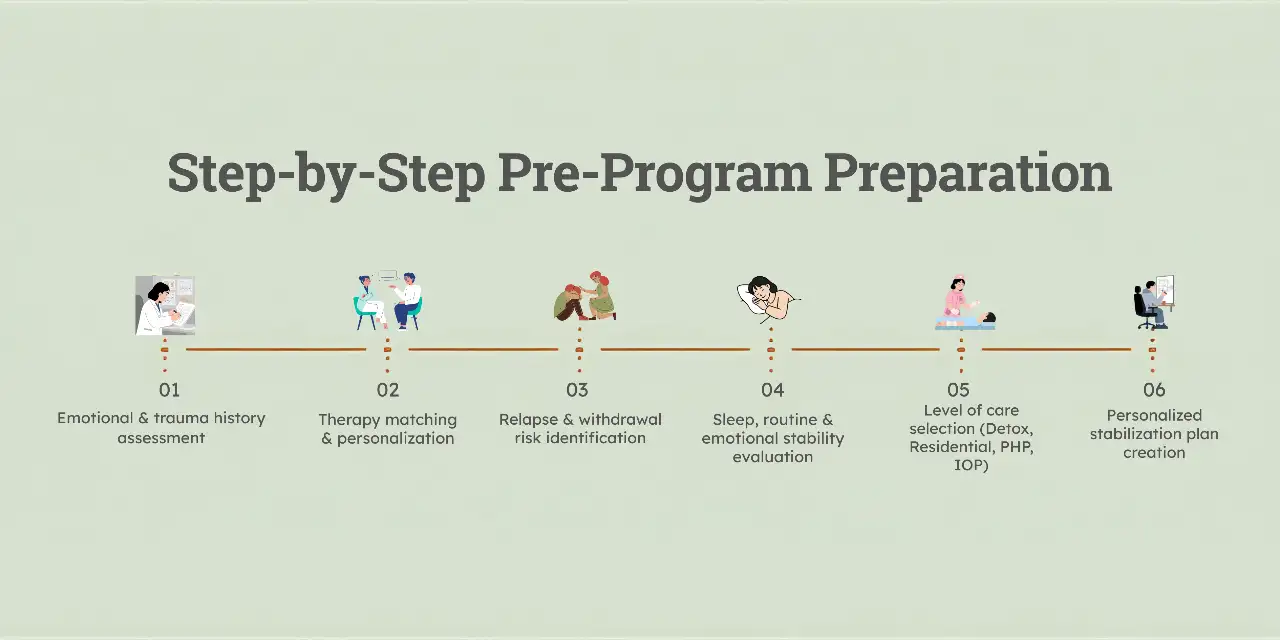
Step 1: Review trauma and emotional history for safe detox pacing.
Step 2: Match you with therapies like CBT or trauma-focused care.
Step 3: Identify relapse triggers and substance-specific withdrawal risks early.
Step 4: Assess sleep, routine, stress, and emotional stability levels.
Step 5: Recommend the right care level: detox, residential, PHP, or IOP.
Step 6: Create a personalized stabilization plan with therapy sequencing and support.
This step-by-step approach helps your mind and body gradually adjust, reducing fear and improving emotional stability.
How Does Environment Impact Emotional Stability During Recovery?
When you’ve experienced trauma, your nervous system becomes more sensitive to stress. Loud noises, lack of privacy, or unpredictable surroundings can trigger anxiety or panic, especially during detox and early recovery. For many patients, the right environment is not just about comfort; it is essential for feeling emotionally secure enough to heal.
Sensory and Emotional Regulation Foundations
Trauma-informed environments are intentionally designed to reduce overstimulation and promote emotional safety. Supportive treatment settings often include:
- Controlled lighting and sound that reduce anxiety and overstimulation.
- Private therapy spaces where you can speak openly and feel safe.
- Consistent routines that help restore emotional balance
- Familiar, supportive clinical staff who provide stability and reassurance
Luxury and High-Acuity Program Enhancements
In trauma-informed care, luxury is about reducing cumulative stress load. At Legacy Healing LA, specialized luxury programs for women, men, artists, couples, and families are structured to reduce stress at every level so you can focus fully on recovery. Enhanced support includes:
- 24/7 clinical supervision to provide immediate support if distress arises
- Concierge-level coordination tailored to reduce scheduling confusion or external obligations.
- Integrative wellness therapies that promote relaxation and nervous system regulation
These features help prevent emotional overwhelm and create a stronger sense of safety throughout treatment.
Which Trauma-Informed Therapies Support Withdrawal and Emotional Stabilization?
During detox and early recovery, trauma-informed therapies help regulate the nervous system, reduce craving intensity, and prevent emotional destabilization. Below we have mentioned four most evidence-based modalities that are generally used to support both physiological stabilization and long-term relapse prevention.
Somatic Experiencing and Body-Based Interventions
Somatic therapies focus on restoring balance to the autonomic nervous system, which is often dysregulated due to trauma and substance dependence. By reducing hyperarousal, panic responses, and stress-driven cravings, body-based interventions strengthen emotional regulation before trauma processing begins.
EMDR for Trauma Processing
Eye Movement Desensitization and Reprocessing (EMDR) is a clinically validated trauma therapy that helps reduce the emotional intensity of distressing memories. When introduced at the right clinical stage, it stabilizes emotional reactivity and lowers relapse vulnerability.
Cognitive and Behavioral Interventions (CBT & DBT)
Cognitive Behavioral Therapy (CBT) and Dialectical Behavioral Therapy (DBT) provide structured psychological tools that help patients manage cravings, emotional instability, and negative thought patterns. These therapies focus on strengthening coping mechanisms that are essential during withdrawal and early recovery.
Mindfulness and Meditation Practices
Mindfulness-based therapies support nervous system recovery by reducing stress reactivity and improving emotional awareness. Substance withdrawal often disrupts sleep, increases anxiety, and weakens emotional regulation. Mindfulness practices help restore balance by calming the nervous system and strengthening cognitive control.
How Can Patients Maintain Emotional Stability After Early Recovery?
The transition from structured treatment back into daily life introduces real-world stressors, environmental triggers, and emotional challenges. The first 90 days following treatment are particularly critical, as the brain continues healing and rebuilding emotional regulation capacity.
Relapse Prevention Across Substances
Each substance affects the brain’s chemistry differently, and personalized relapse prevention plans help patients manage substance-specific withdrawal patterns and emotional fluctuations. Effective strategies include:
- Alcohol Recovery Stabilization– Maintaining structured sleep routines, using trigger journaling, and practicing anxiety management techniques to stabilize mood fluctuations.
- Opioids Recovery Stabilization – Continuing medication-assisted treatment when clinically appropriate, combined with stress-reduction reinforcement through structured therapeutic follow-up
- Stimulants Recovery Stabilization – Implementing behavioral activation schedules and mood tracking to identify dopamine-related crashes and supporting cognitive and emotional recovery.
Skill Transfer and Aftercare Planning
Emotional stability becomes sustainable when patients actively apply treatment skills in their daily lives. Aftercare ensures that recovery tools remain accessible outside the clinical setting, reinforcing long-term emotional regulation. Comprehensive aftercare planning typically includes:
- Home-based emotional regulation practice (breathing protocols, distress tolerance skills, grounding exercises)
- Ongoing trauma-informed therapy when clinically appropriate
- Continued stress and mood monitoring to detect early destabilization
- Accountability systems, including outpatient programs, peer support, or family involvement
When emotional regulation skills are actively transferred into daily life, patients maintain resilience rather than relying solely on treatment structure. Sustained recovery becomes less about crisis management and more about proactive stabilization.
How Can Progress Be Measured During Therapy?
Recovery progress is tracked using clear, measurable indicators to ensure emotional stabilization and reduce relapse risk. Clinicians monitor improvements across mood, cravings, stress response, and sleep to evaluate how well therapy is supporting nervous system recovery.
Key recovery progress indicators include:
- Mood stability: Fewer anxiety episodes, reduced mood swings, and improved emotional control
- Craving reduction: Lower craving intensity, shorter duration, and improved trigger management
- Stress adaptation: Increased ability to handle stress without panic, shutdown, or emotional overwhelm
- Sleep recovery: Improved sleep quality, fewer disruptions, and better daytime focus and energy
Substance-specific recovery outcomes are also tracked:
- Alcohol recovery: Improved sleep regulation, reduced anxiety, and better emotional balance
- Opioid recovery: Reduced cravings, improved nervous system stability, and consistent mood regulation
- Stimulant recovery: Fewer emotional crashes, improved motivation, and stabilized mood patterns
These outcome tracking measures help ensure therapy remains effective, personalized, and aligned with each patient’s long-term emotional and neurological recovery.
Why Trauma-Informed Care at Legacy Healing Center LA Provides a Safer Recovery Experience
Recovery is not just about stopping substance use. It is about helping your nervous system feel safe, stable, and supported throughout the process.
At Legacy Healing Center Los Angeles, trauma-informed care is integrated into every stage of treatment. This allows patients to stabilize emotionally before deeper trauma work begins, reducing distress and improving long-term recovery outcomes so the patients benefit from:
- Personalized stabilization before trauma processing
- Continuous clinical monitoring to prevent emotional overwhelm
- Evidence-based trauma therapies, including EMDR, CBT, and somatic therapy
- Structured aftercare planning to support long-term emotional stability
- Calm, predictable treatment environments designed to reduce stress
This approach helps patients feel safer, more in control, and better equipped to maintain lasting recovery.
Contact us 24X7 at 8008084570